



Man wearing robe : Man wearing robe has a longstanding history across various cultures and civilizations, serving as more than just a piece of clothing. They have evolved from simple garments into symbols of status, ritual, and tradition. One cannot discuss the significance of robes without delving into their multifaceted role in human history.

1. Origins and Early Uses:
The concept of a robe can be traced back to ancient civilizations. In Egypt, for instance, pharaohs wore intricate robes adorned with symbols representing their divine status. Similarly, in ancient Greece, robes, particularly the chiton and himation, were worn by both men and women, reflecting the climate and social norms of the time.
2. Religious and Spiritual Symbolism:
Robes hold a prominent place in religious ceremonies and spiritual practices. Monks and priests from various traditions don robes as a symbol of their commitment to their faith and as a way to denote their roles within religious institutions. The color, material, and design of these robes often carry specific meanings and can indicate a person’s rank or spiritual journey.
3. Symbol of Prestige and Status:
Throughout history, robes have been associated with power and authority. In many cultures, the quality, design, and material of a robe could signify the wearer’s status in society. Kings, emperors, and nobility often donned robes made from luxurious fabrics and adorned with intricate designs to showcase their wealth and position.
4. Contemporary Interpretations:
In modern times, the robe has transcended its traditional roles and has found its way into various aspects of everyday life. From bathrobes worn for comfort and relaxation to designer robes showcased on fashion runways, the garment continues to evolve and adapt to contemporary needs and styles.
5. Cultural Diversity and Influence:
The robe’s design and significance vary widely across different cultures. From the kimono in Japan to the djellaba in North Africa, each robe carries with it a unique history and cultural significance. These garments serve as a testament to the rich tapestry of human civilization and the diverse ways in which societies have expressed themselves through clothing.
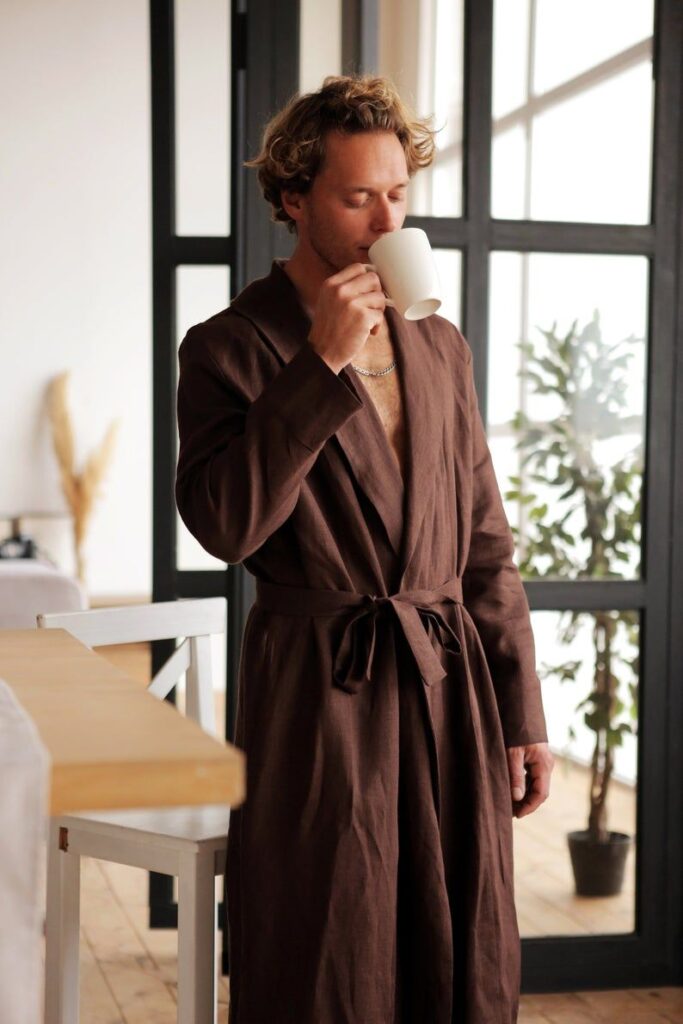
Man wearing robe : The robe, with its rich history, symbolism, and versatility, remains a fascinating garment that continues to evolve and adapt to changing times. Whether worn for ceremonial purposes, spiritual significance, or simply for comfort and relaxation, the robe holds a special place in the hearts and minds of people around the world. As a testament to its enduring appeal, the robe continues to be celebrated and embraced in various forms, reflecting the diverse and multifaceted nature of human culture and expression.
The robe, in its various forms and interpretations, remains a timeless garment that transcends cultures and epochs. Its significance extends beyond mere aesthetics, encapsulating the values, beliefs, and traditions of the societies that have embraced it. Whether worn for religious ceremonies, ceremonial occasions, or everyday comfort, the robe continues to hold a special place in the annals of human history and cultural expression.
Robes have long held a significant place in the world of men’s fashion, serving both practical and symbolic purposes across various cultures and historical periods. Their journey from utilitarian garments to symbols of status and relaxation provides a fascinating glimpse into the evolution of clothing and its sociocultural implications.
Historical Origins
The history of robes can be traced back thousands of years. In ancient civilizations like Egypt, Mesopotamia, and China, robes were standard attire for both men and women. Made from luxurious materials like silk and linen, these garments were often reserved for the elite or religious leaders.
Functional Utility
Robes were initially designed for practicality. They provided warmth in colder climates and protection from the elements. Their loose, flowing design allowed for ease of movement, making them ideal for daily tasks and labor-intensive activities. Over time, different cultures adapted the robe to suit their specific needs, resulting in a diverse range of styles and designs.
Symbolism and Status
As societies evolved, robes began to acquire symbolic meanings. In many cultures, the quality and design of a man’s robe were indicative of his status and wealth. Elaborately embroidered robes adorned with intricate patterns and motifs became symbols of power, prestige, and authority. They were often worn during ceremonial occasions, religious rituals, and important gatherings to convey a sense of importance and dignity.
Cultural Significance
The significance of robes varies across different cultures. In some traditions, robes are associated with spirituality and enlightenment. Monks and religious leaders often wear robes as a symbol of their commitment to a higher calling. The color, style, and design of the robe may hold specific meanings and convey messages about the wearer’s spiritual journey and rank within the religious hierarchy.
Modern Interpretations
In contemporary men’s fashion, the robe has undergone a transformation. While still prevalent in certain cultural and religious contexts, robes have also found their way into mainstream fashion. Designers have reimagined the traditional robe, incorporating modern elements and materials to create stylish and versatile garments suitable for various occasions.
Robes are no longer confined to the realms of the elite or religious institutions. They have become accessible to a broader audience, offering comfort, elegance, and a sense of luxury. Whether worn as loungewear at home or as a fashion statement at social events, the robe continues to evolve, reflecting changing tastes and lifestyles.
The robe’s journey through history is a testament to its enduring appeal and significance. From its humble beginnings as a functional garment to its current status as a symbol of style and sophistication, the robe has remained a constant presence in men’s fashion. Its rich history and cultural significance continue to inspire designers and fashion enthusiasts alike, ensuring that the robe will remain a timeless classic for generations to come.
Robes, a staple in many cultures and epochs, have transcended mere clothing to become symbols of various aspects of human life. From the ceremonial robes of ancient priests to the cozy bathrobes we wear at home, this garment holds a unique position in the annals of fashion and symbolism.
Historical Significance
The history of the robe can be traced back thousands of years. In ancient civilizations such as Egypt, Greece, and Rome, robes were often worn as symbols of status, authority, or religious significance. For instance, in ancient Rome, the “toga” was a distinctive robe worn by citizens, signifying their status and identity. Similarly, in ancient Egypt, the “shenti” was a type of skirt-like robe worn by pharaohs and high-ranking officials.
Throughout the Middle Ages in Europe, robes continued to be emblematic of authority and rank. Monarchs and nobles wore elaborate robes adorned with intricate designs and precious materials to signify their position in society.
Symbolism and Meaning
Beyond their historical significance, robes have also been imbued with symbolic meaning in various cultures and religions. In many spiritual traditions, robes are worn by clergy and monks as symbols of their commitment to their faith and their role within the religious community. The color, style, and design of the robe often carry specific meanings, reflecting the values and teachings of the particular tradition.
For example, in Buddhist traditions, monks wear saffron-colored robes, symbolizing simplicity, humility, and the renunciation of worldly attachments. In contrast, in some Christian traditions, priests wear different colored robes during various liturgical seasons, each color conveying different aspects of the faith and its teachings.
Modern Interpretations
In contemporary society, robes have taken on new meanings and functions. While they still retain their historical and symbolic significance in many contexts, they have also become associated with comfort, relaxation, and self-care. The bathrobe, a soft and cozy garment worn after a bath or shower, has become a symbol of leisure and relaxation in the modern world.
Moreover, the robe has found its way into popular culture, often appearing in films, literature, and art as a symbol of mystery, elegance, or intrigue. From the iconic dressing gowns worn by characters in classic Hollywood films to the luxurious robes worn by fashion icons and celebrities, the robe continues to captivate and inspire.

Man wearing robe : Robes, a staple in many cultures and epochs, have transcended mere clothing to become symbols of various aspects of human life. From the ceremonial robes of ancient priests to the cozy bathrobes we wear at home, this garment holds a unique position in the annals of fashion and symbolism
The robe, with its rich history, symbolism, and versatility, remains a fascinating garment that continues to evolve and adapt to changing times. Whether worn for ceremonial purposes, spiritual significance, or simply for comfort and relaxation, the robe holds a special place in the hearts and minds of people around the world. As a testament to its enduring appeal, the robe continues to be celebrated and embraced in various forms, reflecting the diverse and multifaceted nature of human culture and expression.


